AI on Olares is growing beyond a single chat model. Apps can now use different capabilities for conversation, speech recognition, image generation, embedding, OCR, translation, web search, and more.
Router brings these capabilities together and makes them available across Olares through one consistent interface.
One gateway for different AI capabilities
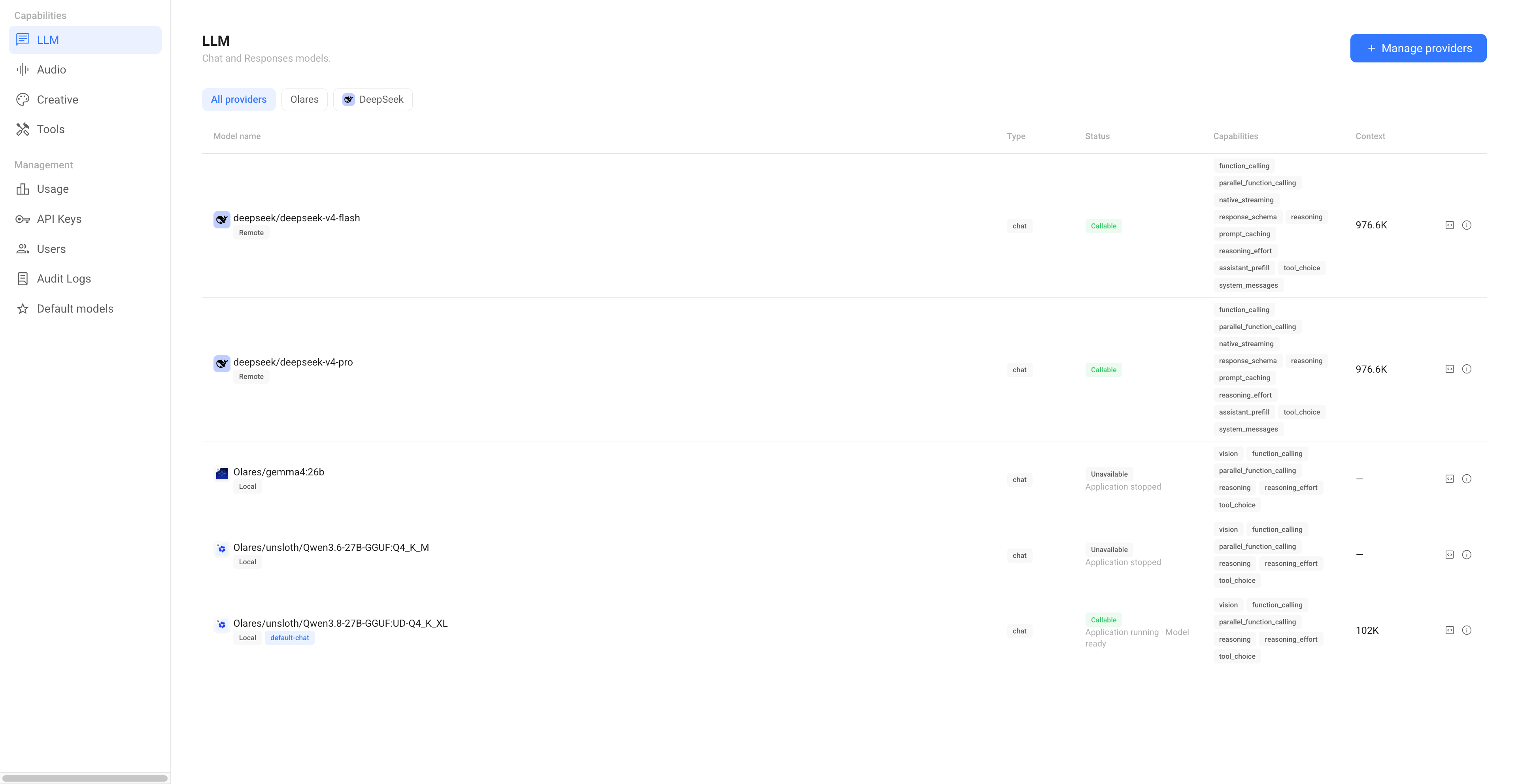
Router organizes models and tools into four categories: LLM, Audio, Creative, and Tools.
Locally deployed models form the core of this setup, keeping AI workloads close to your data and hardware. Compatible external services can also be connected when needed.
Once a capability is available through Router, different apps can access it through the same interface.
Stable defaults for your apps
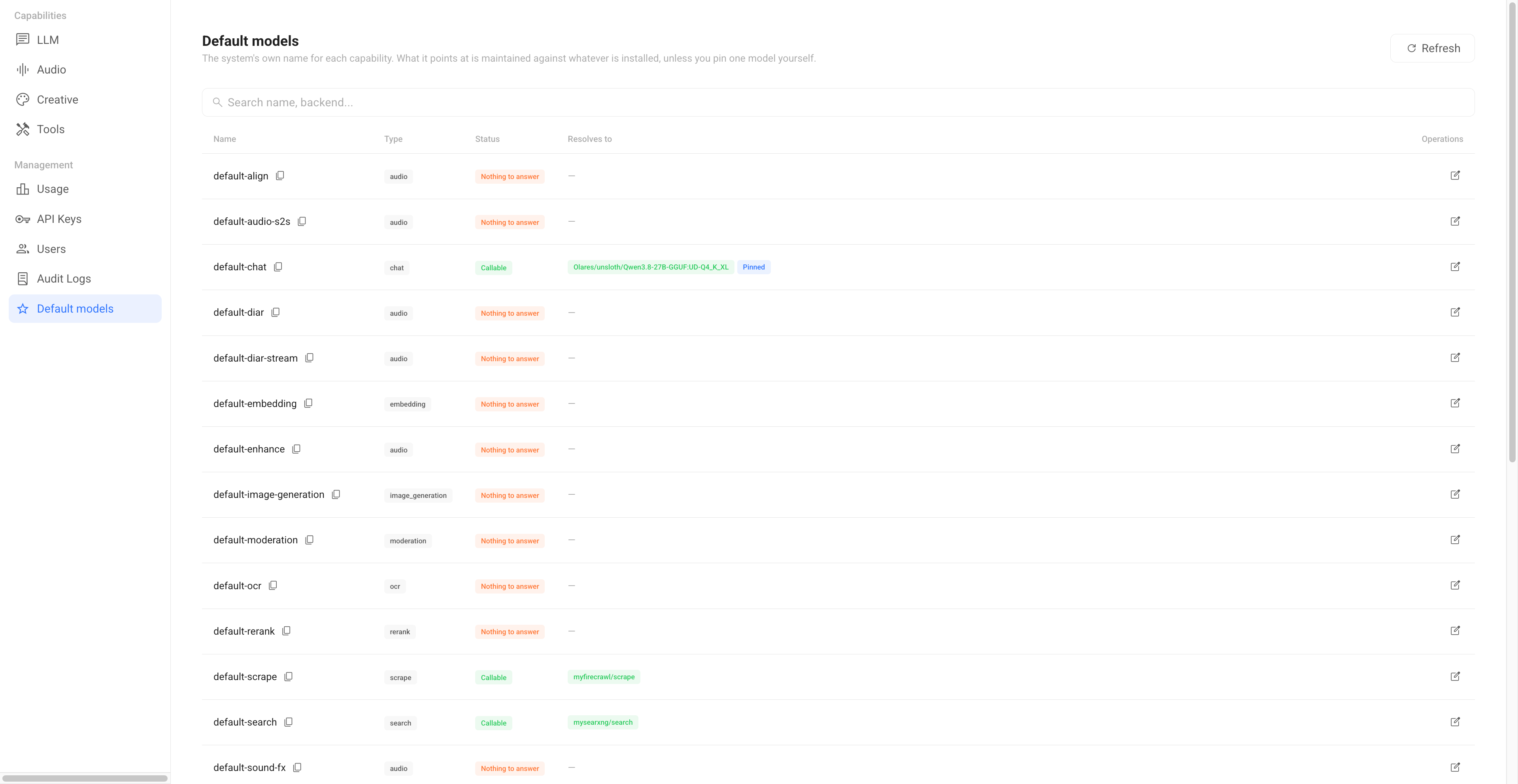
Router lets you choose a default model for each type of capability. For example, an app can call default-chat without depending on a specific model name.
You can update which model provides that capability based on privacy, quality, speed, or hardware requirements. Apps continue using the same stable entry point as your setup changes.
Manage access and understand usage
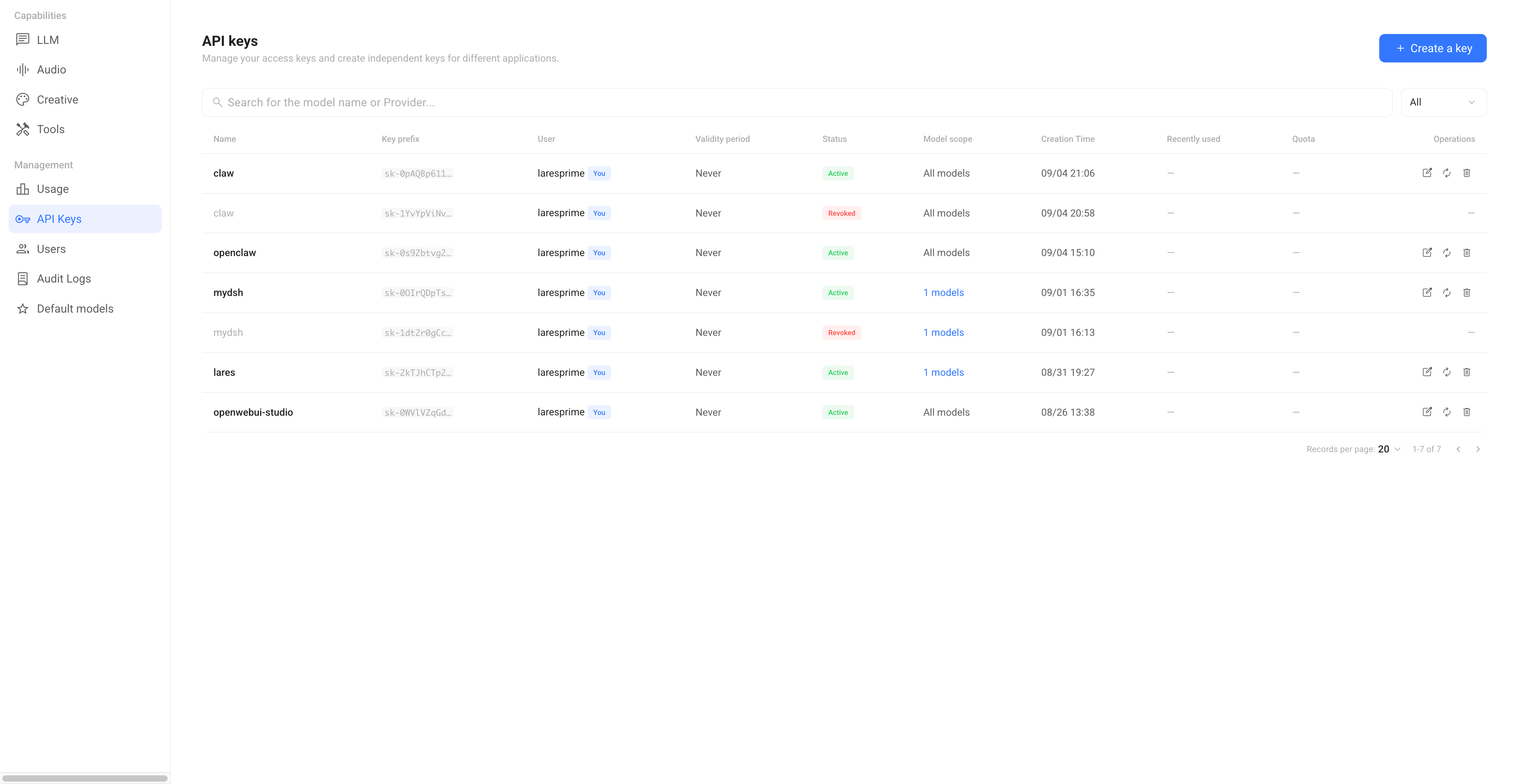
Each app can use its own API Key, making access easier to manage and revoke independently.
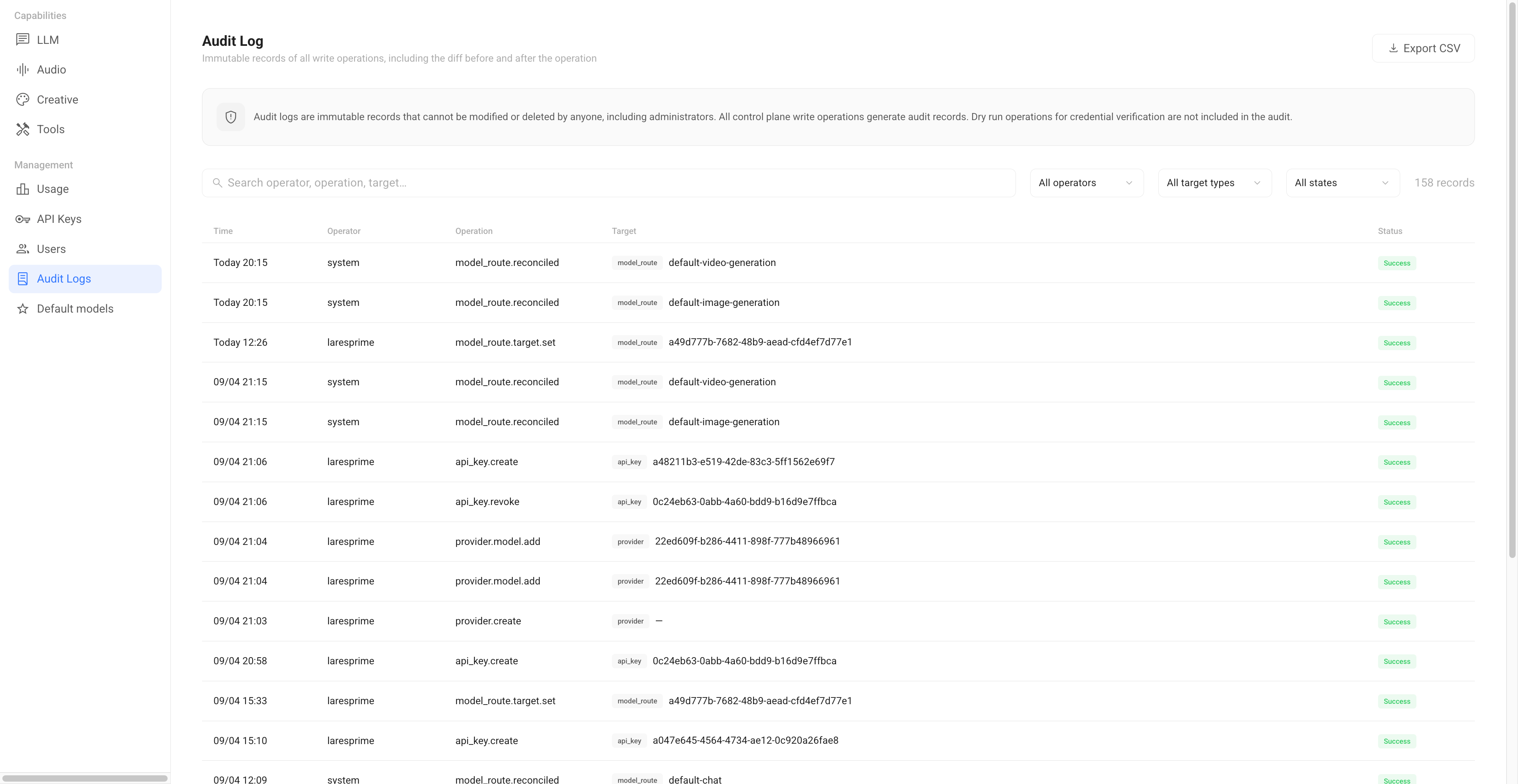
Usage shows which capabilities are being called, whether requests succeed, how many tokens they consume, and how long they take. Audit Logs record configuration changes, giving you a clear history of how Router has been managed.
What would shape your default setup?
When choosing the default models for your Olares, what matters most to you: privacy, response quality, speed, or hardware usage? Tell us in the comments!